National
• 1 hour ago• Lim_Rothanaksambath
Cambodia Proposes Three Points to Resolve Maritime Dispute with Thailand
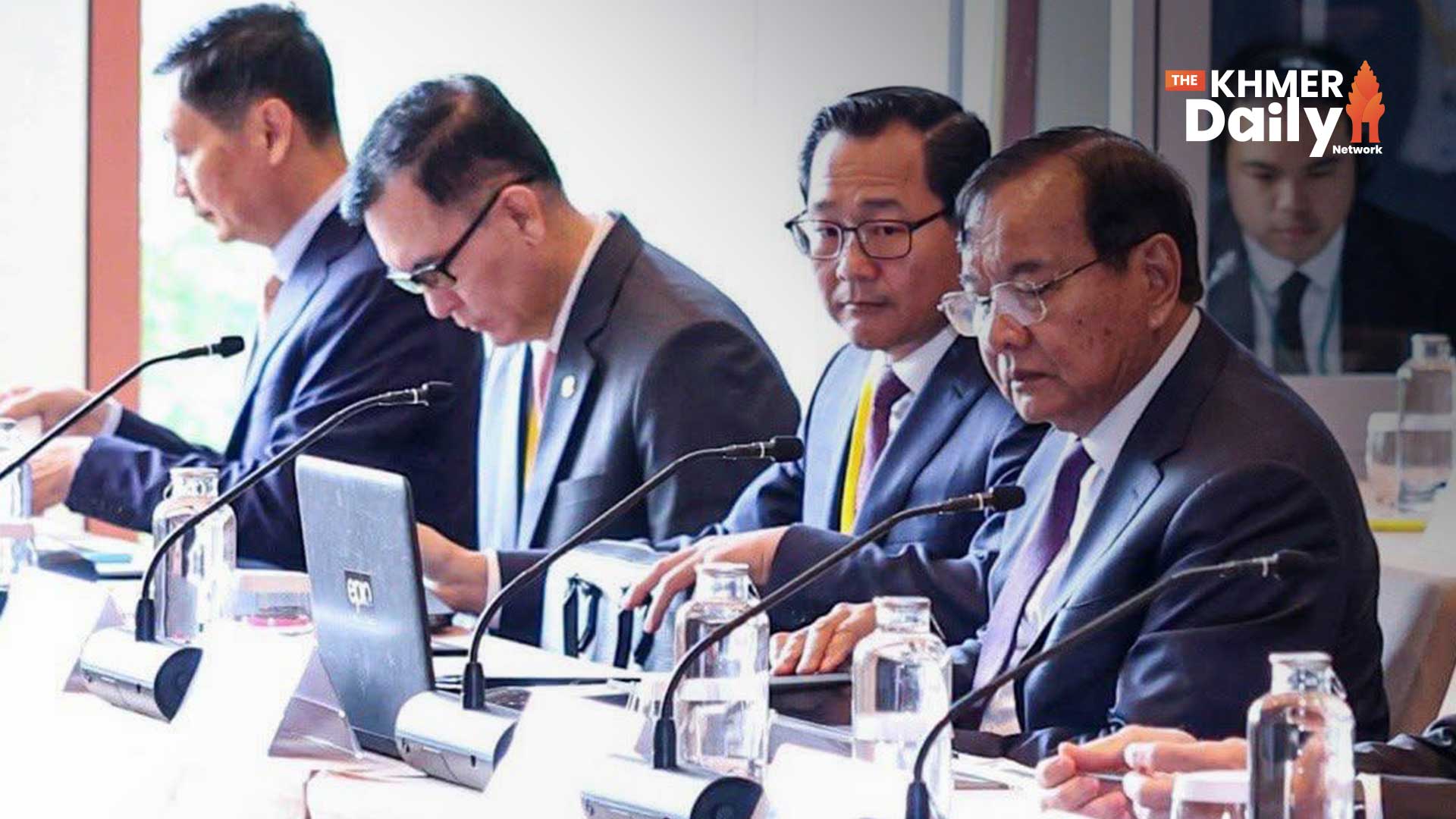
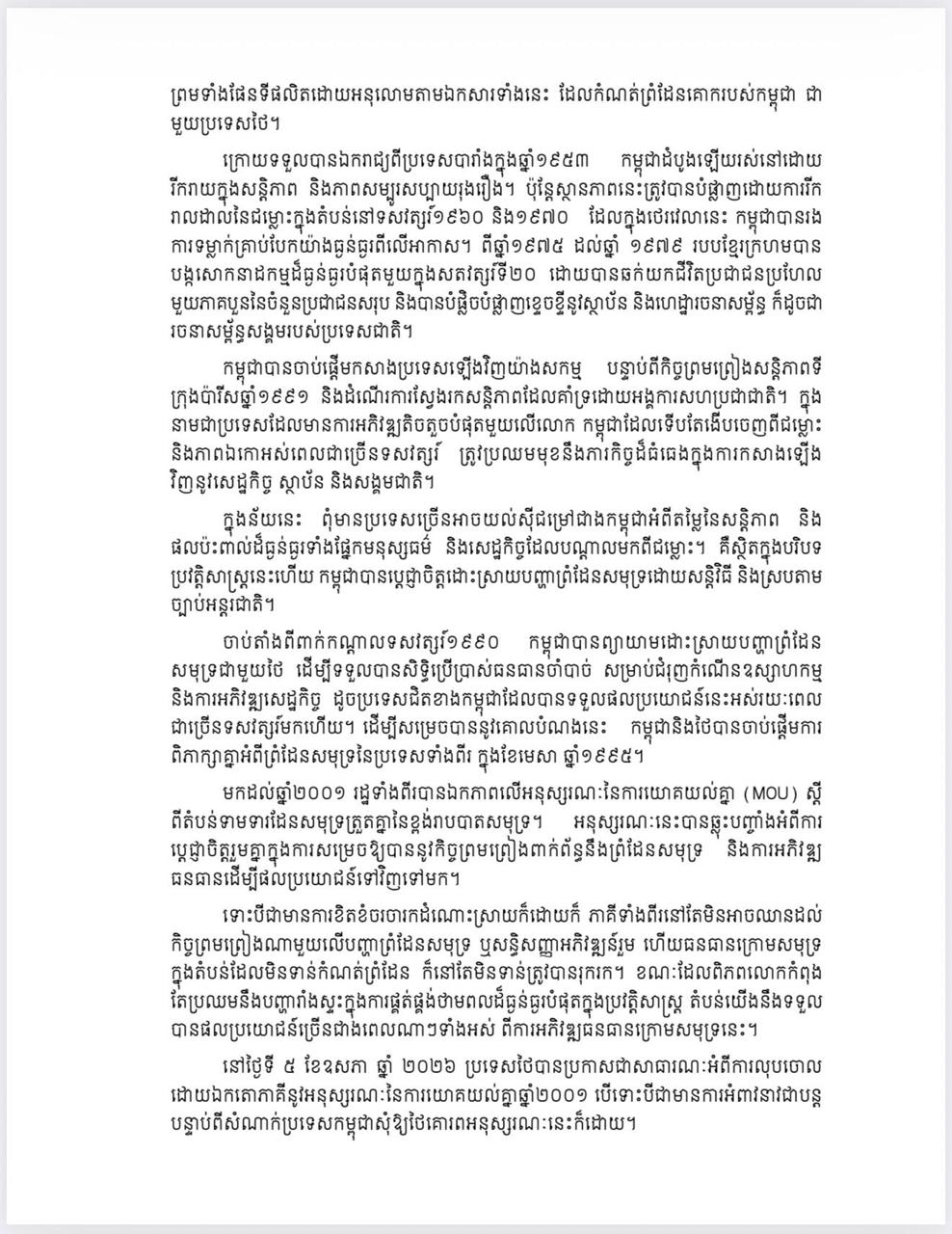
September 15, 2026: His Excellency Deputy Prime Minister PRAK Sokhonn, Minister of Foreign Affairs and International Cooperation, in his capacity as Agent for the Kingdom of Cambodia, delivered an official opening statement at the First Meeting of the Conciliation Commission between Cambodia and Thailand, held under the framework of the Permanent Court of Arbitration (PCA) on the morning of September 15, 2026, in Singapore. He reaffirmed Cambodia's firm stance and peaceful spirit in resolving the maritime dispute that has spanned decades, in accordance with international law.
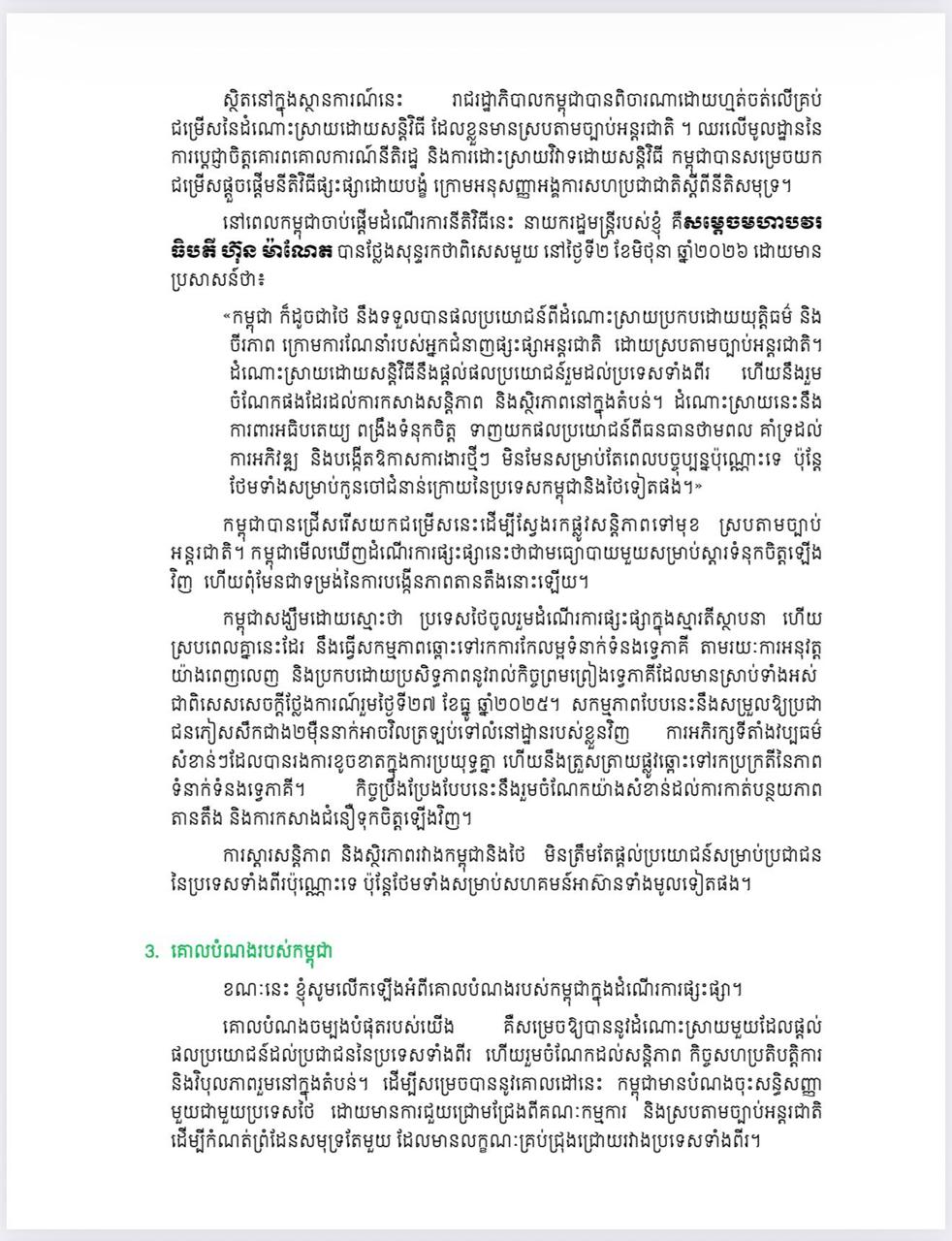
According to the report of the Agent for the Kingdom of Cambodia at the First Meeting of the Conciliation Commission (Opening Session) this morning, restoring peace and stability between Cambodia and Thailand benefits not only the people of both countries but also the entire ASEAN community. Cambodia has chosen this path to seek a peaceful way forward in accordance with international law, because Cambodia views this conciliation process as a means to rebuild confidence and not as a form of escalating tensions.
Cambodia sincerely hopes that Thailand will participate in the conciliation process in a constructive spirit while simultaneously taking action toward improving bilateral relations through the full and effective implementation of all existing bilateral agreements, particularly the Joint Statement of December 27, 2025.
To achieve this objective, Cambodia has proposed three points:
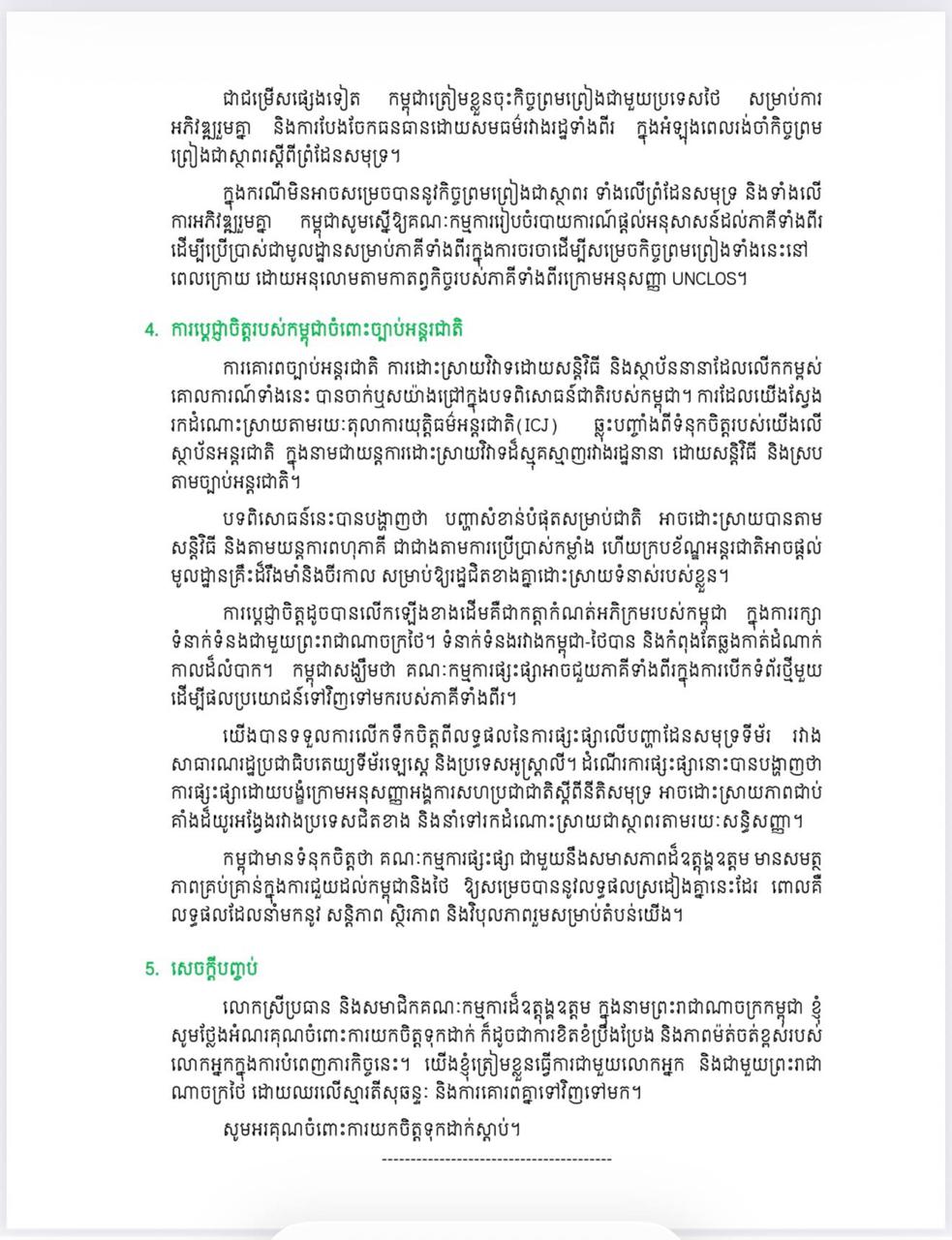
First. Cambodia intends to conclude a treaty with Thailand, with the assistance of the Commission and in accordance with international law, to determine a single comprehensive maritime boundary between the two countries.
Second. Cambodia is prepared to enter into an agreement with Thailand for joint development and equitable sharing of resources between the two states while awaiting a final agreement on the maritime boundary.
Third. In the event that neither a permanent maritime boundary agreement nor a joint development agreement can be reached, Cambodia requests that the Commission prepare a report providing recommendations to both parties, to serve as a basis for future negotiations in accordance with their obligations under UNCLOS.
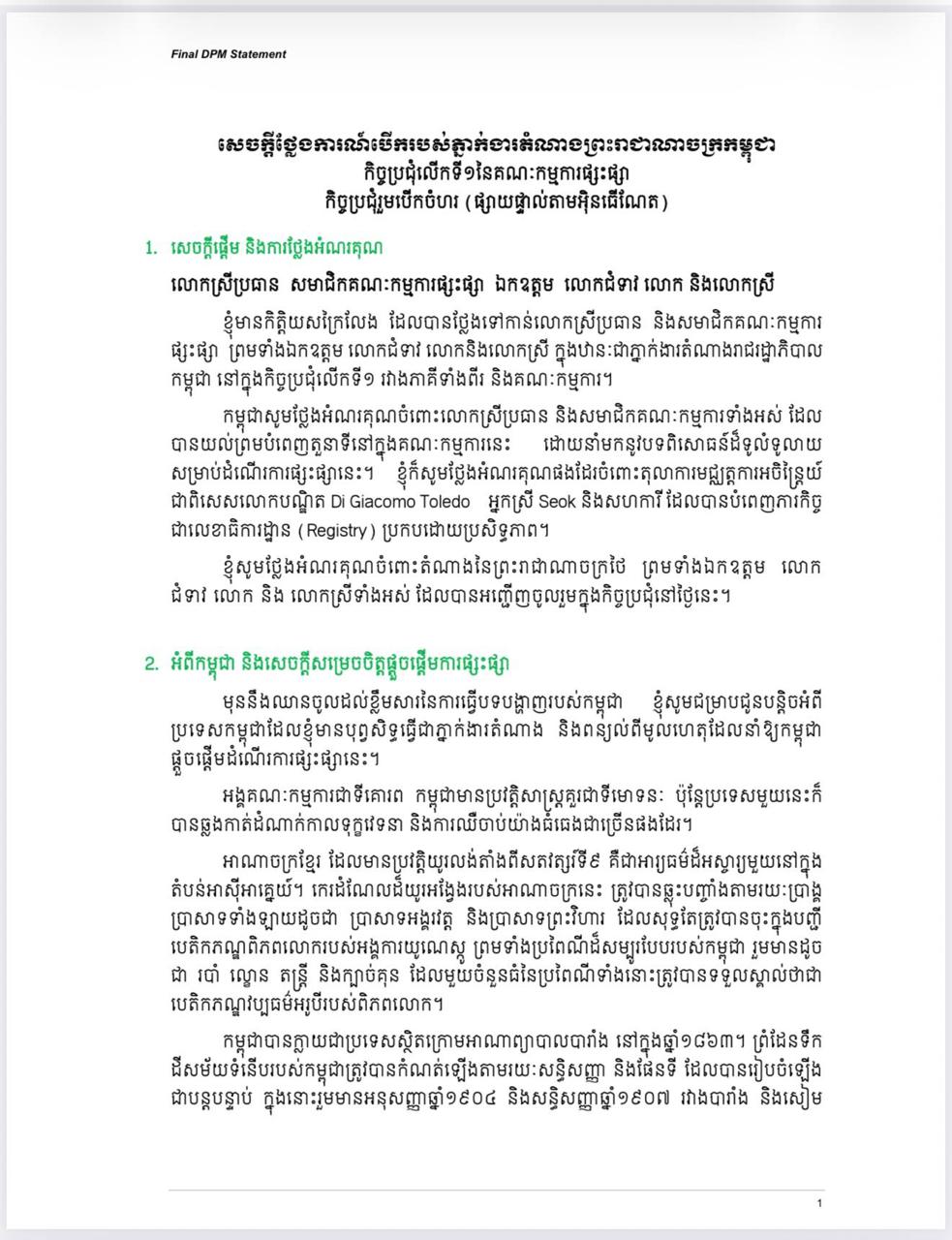
In this regard, the Agent for the Kingdom of Cambodia also expressed Cambodia's firm commitment that respect for international law, peaceful dispute resolution, and the institutions that promote these principles are deeply rooted in Cambodia's national experience. Cambodia's pursuit of solutions through the International Court of Justice (ICJ) reflects its confidence in international institutions as mechanisms for peacefully resolving complex disputes between states in accordance with international law. This experience has demonstrated that issues of national importance can be resolved through peaceful and multilateral mechanisms rather than through the use of force, and that the international framework can provide a strong and lasting foundation for neighboring states to resolve their differences.
The above commitments define Cambodia's approach to maintaining relations with the Kingdom of Thailand. Cambodia-Thailand relations have been going through a difficult period. Cambodia hopes that the Conciliation Commission can help both parties open a new chapter for their mutual benefit.
Cambodia is confident that the Conciliation Commission, with its distinguished composition, is fully capable of helping Cambodia and Thailand achieve a similar result—one that brings peace, stability, and shared prosperity to our region.
Reported by The Khmer Daily Network
According to the report of the Agent for the Kingdom of Cambodia at the First Meeting of the Conciliation Commission (Opening Session) this morning, restoring peace and stability between Cambodia and Thailand benefits not only the people of both countries but also the entire ASEAN community. Cambodia has chosen this path to seek a peaceful way forward in accordance with international law, because Cambodia views this conciliation process as a means to rebuild confidence and not as a form of escalating tensions.
Cambodia sincerely hopes that Thailand will participate in the conciliation process in a constructive spirit while simultaneously taking action toward improving bilateral relations through the full and effective implementation of all existing bilateral agreements, particularly the Joint Statement of December 27, 2025.
To achieve this objective, Cambodia has proposed three points:
First. Cambodia intends to conclude a treaty with Thailand, with the assistance of the Commission and in accordance with international law, to determine a single comprehensive maritime boundary between the two countries.
Second. Cambodia is prepared to enter into an agreement with Thailand for joint development and equitable sharing of resources between the two states while awaiting a final agreement on the maritime boundary.
Third. In the event that neither a permanent maritime boundary agreement nor a joint development agreement can be reached, Cambodia requests that the Commission prepare a report providing recommendations to both parties, to serve as a basis for future negotiations in accordance with their obligations under UNCLOS.
In this regard, the Agent for the Kingdom of Cambodia also expressed Cambodia's firm commitment that respect for international law, peaceful dispute resolution, and the institutions that promote these principles are deeply rooted in Cambodia's national experience. Cambodia's pursuit of solutions through the International Court of Justice (ICJ) reflects its confidence in international institutions as mechanisms for peacefully resolving complex disputes between states in accordance with international law. This experience has demonstrated that issues of national importance can be resolved through peaceful and multilateral mechanisms rather than through the use of force, and that the international framework can provide a strong and lasting foundation for neighboring states to resolve their differences.
The above commitments define Cambodia's approach to maintaining relations with the Kingdom of Thailand. Cambodia-Thailand relations have been going through a difficult period. Cambodia hopes that the Conciliation Commission can help both parties open a new chapter for their mutual benefit.
Cambodia is confident that the Conciliation Commission, with its distinguished composition, is fully capable of helping Cambodia and Thailand achieve a similar result—one that brings peace, stability, and shared prosperity to our region.
Reported by The Khmer Daily Network