National
• 1 month ago• Lim_Rothanaksambath
Cambodian Senate Hits Back at Thai Counterpart, Affirms Sovereignty and Rejects Unilateral Claims
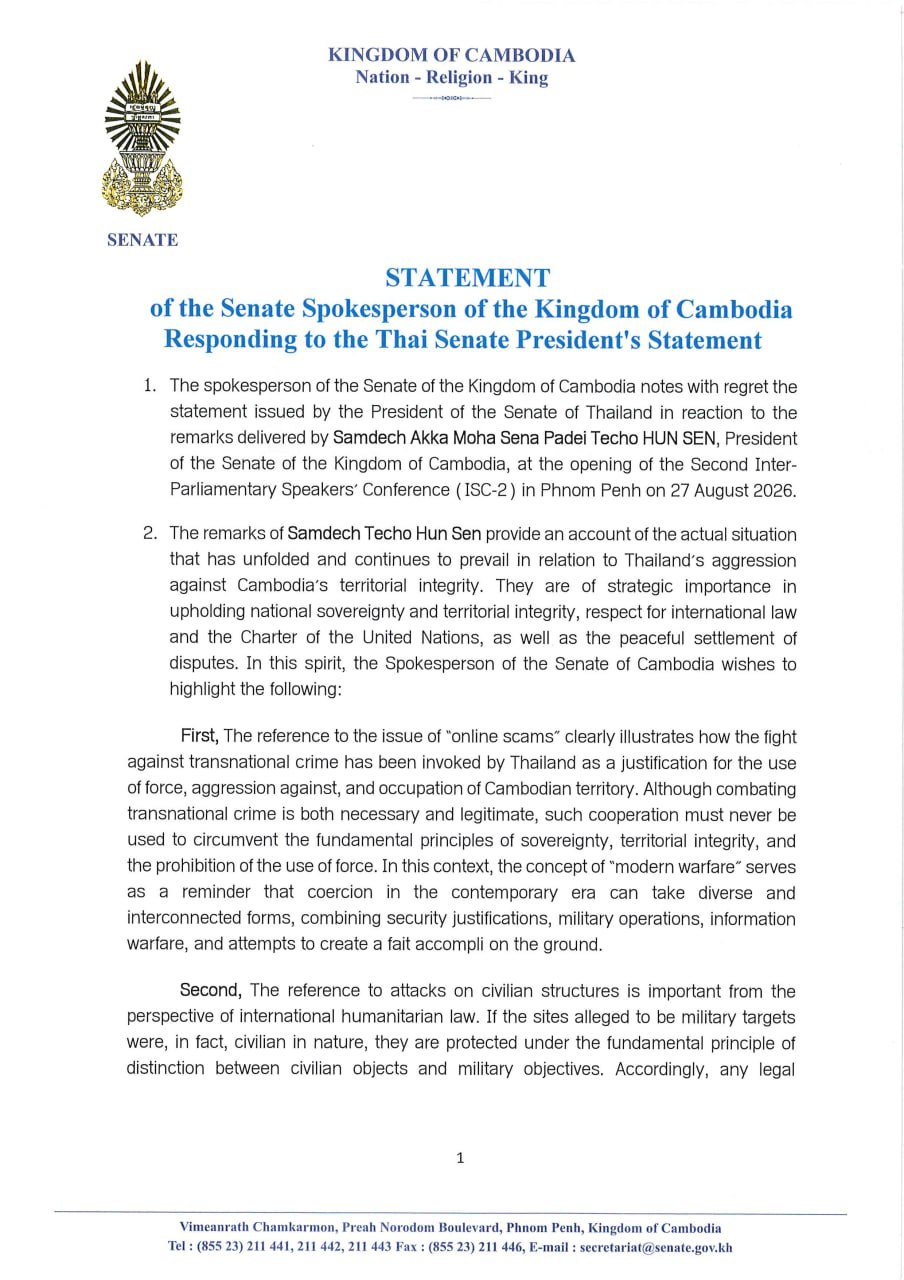
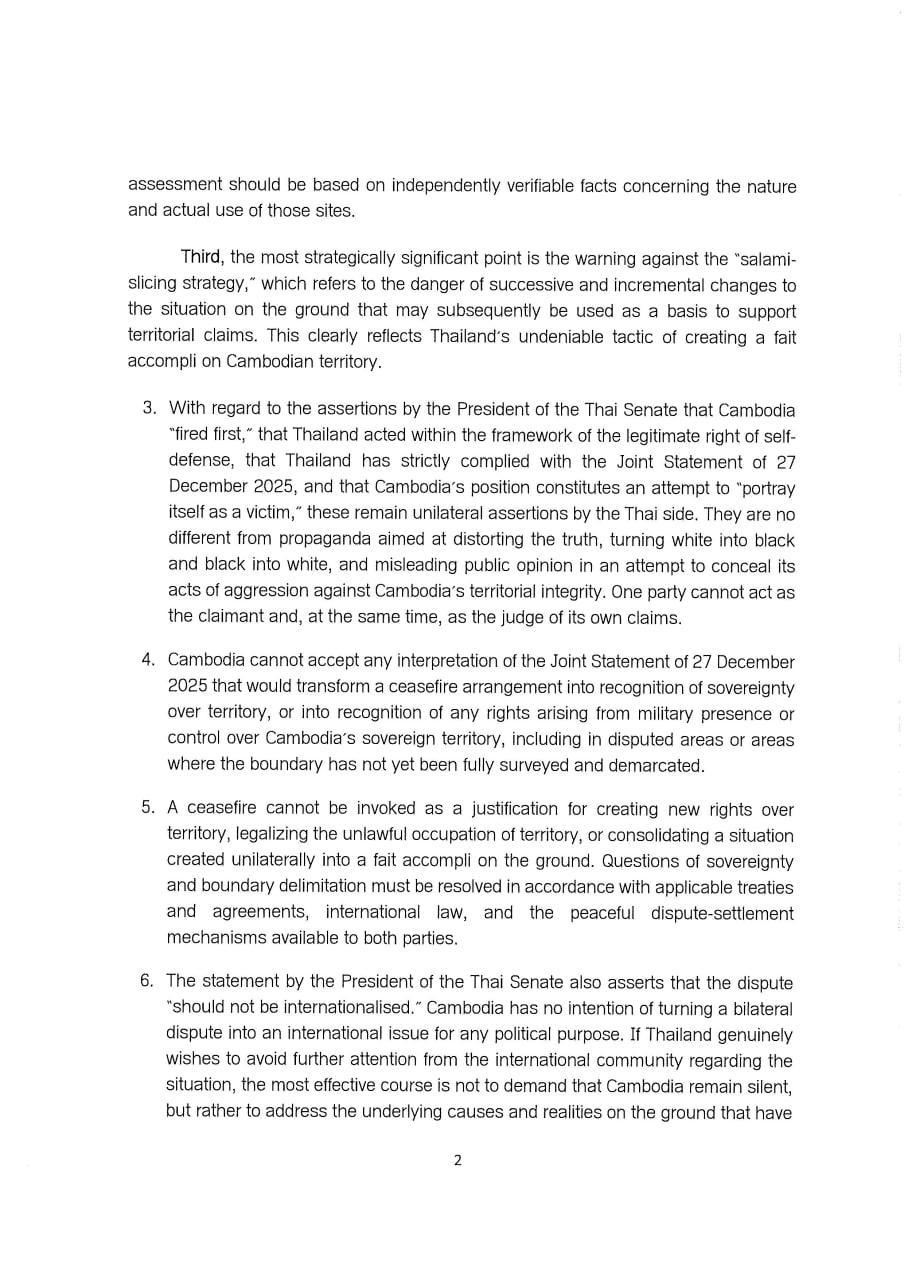
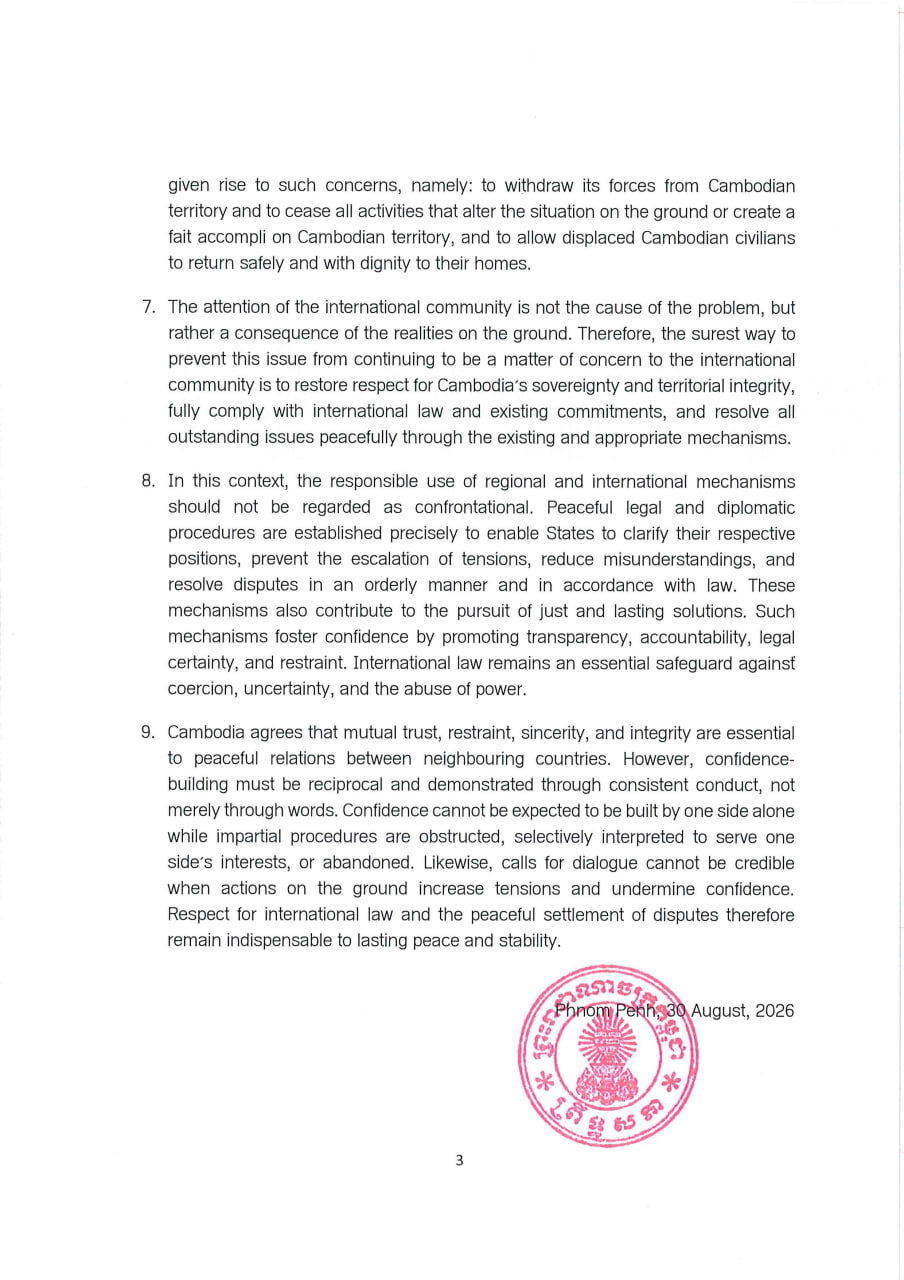
PHNOM PENH, August 31, 2026 – The Spokesperson of the Senate of the Kingdom of Cambodia has issued a detailed response to the statement made by the President of the Senate of Thailand, expressing regret over the Thai official's reaction to Samdech Techo Hun Sen's address at the 2nd Inter-Parliamentary Speakers' Conference (ISC-2) on August 27.
The statement defends Samdech Techo Hun Sen's remarks as a factual account of Thailand's aggression against Cambodia's territorial integrity and stresses their strategic importance in upholding national sovereignty, international law, and the peaceful settlement of disputes.
Summary of Key Points:
1. Use of Force Disguised as Transnational Crime Fight: Thailand has invoked the fight against online scams as a justification for military aggression and occupation of Cambodian territory. While combating transnational crime is legitimate, such cooperation must not be used to bypass the fundamental principles of sovereignty and the prohibition of the use of force.
2. Civilian Structures Protected Under International Law: Attacks on civilian sites must be assessed under international humanitarian law. The principle of distinction between civilian and military objectives is clear, and any legal evaluation must be based on independently verifiable facts.
3. "Salami-Slicing" and Fait Accompli: The statement warns against Thailand's incremental tactic of creating new ground realities that may later be used to support territorial claims, reflecting a clear attempt to establish a fait accompli on Cambodian territory.
4. Thai Claims Rejected as Propaganda: Cambodia rejects Thailand's assertions that it "fired first," acted in self-defense, or complied with the Joint Statement. These are described as unilateral propaganda aimed at misleading public opinion and distorting the truth.
5. Ceasefire Does Not Confer Sovereignty: Cambodia cannot accept that the December 2025 Joint Statement creates any recognition of sovereignty or rights arising from military control over Cambodian territory. A ceasefire cannot be used to justify unlawful occupation or solidify a fait accompli.
6. Address Root Causes, Not International Attention: Cambodia does not seek to internationalise the dispute. If Thailand wishes to avoid international scrutiny, it must address the root causes—withdraw its forces, cease unilateral activities, and allow displaced civilians to return safely and with dignity.
7. International Attention Follows Ground Realities: The international community's concern is a consequence of events on the ground, not the cause. The only way to reduce scrutiny is to restore respect for Cambodia's sovereignty and comply with international law.
8. Peaceful Mechanisms Are Not Confrontational: Cambodia reaffirms that legal and diplomatic procedures exist to help states clarify positions, prevent escalation, and resolve disputes. These mechanisms promote transparency, accountability, and restraint.
9. Mutual Trust Must Be Demonstrated, Not Just Spoken: Cambodia agrees that trust and restraint are essential, but they must be reciprocal and demonstrated through consistent action—not empty words. Calls for dialogue are hollow when actions on the ground increase tensions.
The statement was issued on August 30, 2026, in Phnom Penh.
— Source: Senate of the Kingdom of Cambodia
Reported by The Khmer Daily Nework
The statement defends Samdech Techo Hun Sen's remarks as a factual account of Thailand's aggression against Cambodia's territorial integrity and stresses their strategic importance in upholding national sovereignty, international law, and the peaceful settlement of disputes.
Summary of Key Points:
1. Use of Force Disguised as Transnational Crime Fight: Thailand has invoked the fight against online scams as a justification for military aggression and occupation of Cambodian territory. While combating transnational crime is legitimate, such cooperation must not be used to bypass the fundamental principles of sovereignty and the prohibition of the use of force.
2. Civilian Structures Protected Under International Law: Attacks on civilian sites must be assessed under international humanitarian law. The principle of distinction between civilian and military objectives is clear, and any legal evaluation must be based on independently verifiable facts.
3. "Salami-Slicing" and Fait Accompli: The statement warns against Thailand's incremental tactic of creating new ground realities that may later be used to support territorial claims, reflecting a clear attempt to establish a fait accompli on Cambodian territory.
4. Thai Claims Rejected as Propaganda: Cambodia rejects Thailand's assertions that it "fired first," acted in self-defense, or complied with the Joint Statement. These are described as unilateral propaganda aimed at misleading public opinion and distorting the truth.
5. Ceasefire Does Not Confer Sovereignty: Cambodia cannot accept that the December 2025 Joint Statement creates any recognition of sovereignty or rights arising from military control over Cambodian territory. A ceasefire cannot be used to justify unlawful occupation or solidify a fait accompli.
6. Address Root Causes, Not International Attention: Cambodia does not seek to internationalise the dispute. If Thailand wishes to avoid international scrutiny, it must address the root causes—withdraw its forces, cease unilateral activities, and allow displaced civilians to return safely and with dignity.
7. International Attention Follows Ground Realities: The international community's concern is a consequence of events on the ground, not the cause. The only way to reduce scrutiny is to restore respect for Cambodia's sovereignty and comply with international law.
8. Peaceful Mechanisms Are Not Confrontational: Cambodia reaffirms that legal and diplomatic procedures exist to help states clarify positions, prevent escalation, and resolve disputes. These mechanisms promote transparency, accountability, and restraint.
9. Mutual Trust Must Be Demonstrated, Not Just Spoken: Cambodia agrees that trust and restraint are essential, but they must be reciprocal and demonstrated through consistent action—not empty words. Calls for dialogue are hollow when actions on the ground increase tensions.
The statement was issued on August 30, 2026, in Phnom Penh.
— Source: Senate of the Kingdom of Cambodia
Reported by The Khmer Daily Nework