
National
• 3 days ago• Lim_Rothanaksambath
Cambodia's AI Revolution: Are We Becoming Smarter, or Simply More Dependent on Machines?
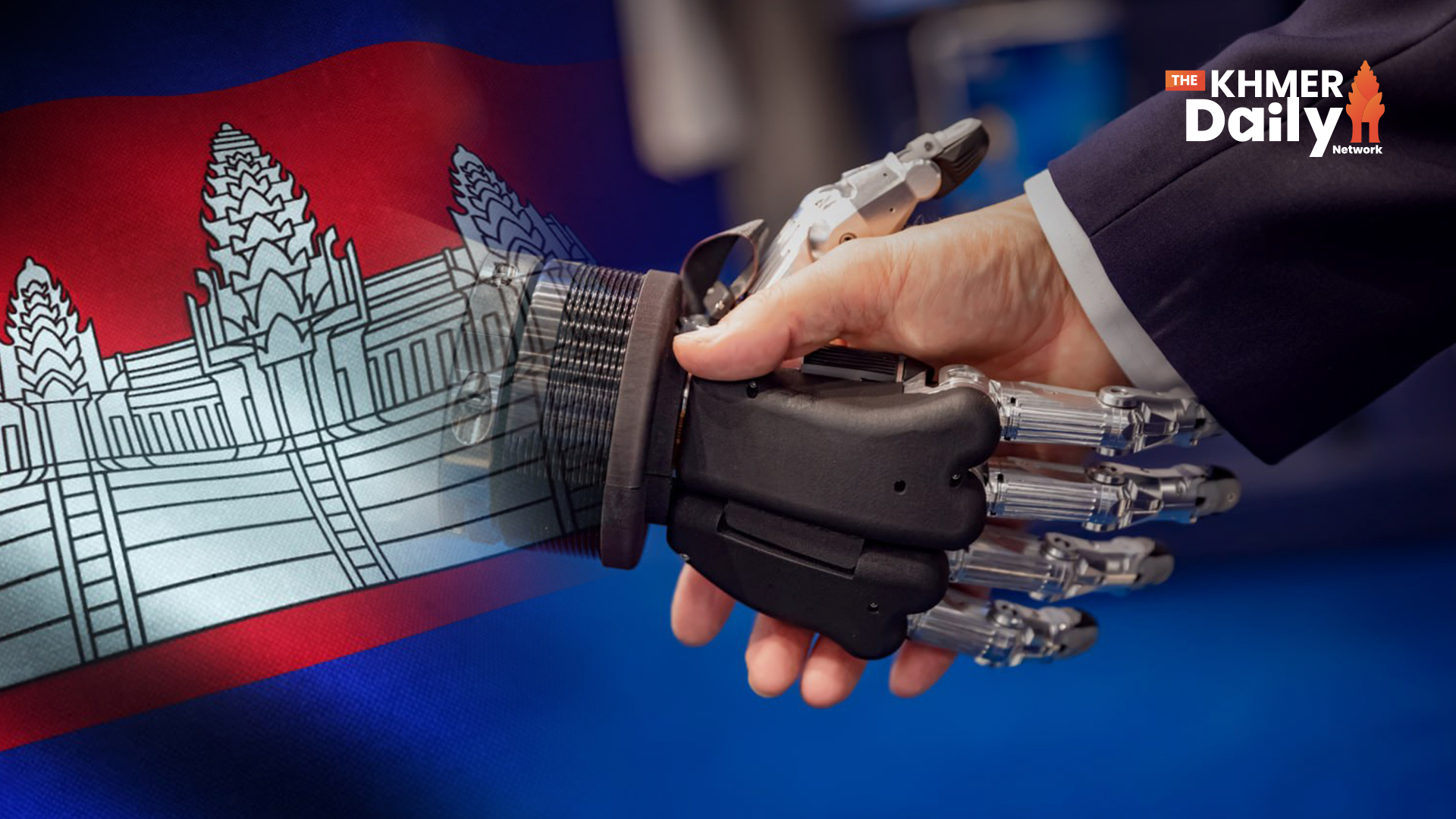
PHNOM PENH, Cambodia — KDN News
Artificial intelligence is rapidly changing the way people learn, work, communicate and conduct business. In Cambodia, its growing use among university students, teachers, businesses and young professionals reflects a country increasingly connected to the global digital transformation. Yet, behind this technological progress lies a question that deserves serious public attention: Is Cambodia developing a generation that can think independently with the support of artificial intelligence, or one that increasingly depends on machines to do the thinking?
The question is no longer whether Cambodia should embrace artificial intelligence. The technology is already here, and its influence will continue to expand across almost every sector of society. From classrooms and newsrooms to government institutions and private businesses, AI offers opportunities to improve productivity, accelerate access to information and support innovation.
For a developing country such as Cambodia, these opportunities are significant. AI-powered tools can help students access learning materials, enable small businesses to compete more effectively, support farmers with information and give local entrepreneurs access to technologies that were previously beyond their reach.
However, technological adoption should not be confused with human development. A society may become increasingly skilled at operating digital tools without necessarily becoming better at critical thinking, problem-solving or making informed decisions.
This distinction is particularly important for Cambodia, where investment in education, workforce development and human capital remains central to the country's long-term development ambitions.
A study conducted by the Cambodia Development Resource Institute (CDRI) in October 2026, titled After Adoption: Use, Skill and Rules for Generative AI in Cambodian Higher Education, provides an important picture of how quickly AI is entering Cambodian universities. Based on surveys of 1,510 students and 285 lecturers, the research found that 98.3 per cent of students and 94.4 per cent of lecturers had used AI.
The findings demonstrate how widely the technology has been adopted within higher education. Nevertheless, widespread use does not necessarily indicate a comparable level of understanding. The research also identified concerns about AI literacy, privacy and the responsible handling of information.
One particularly important finding was that only 45.9 per cent of surveyed students correctly understood that companies operating AI platforms could potentially access information submitted through their services.
This raises concerns beyond technology itself. It highlights the need to ensure that students understand the tools they are using, including their limitations, potential risks and implications for personal information.
The challenge becomes even more significant when considering how AI is changing the learning habits of younger generations.
A 2025 empirical study by researchers Sok, Heng and Pum, published in SAGE Open, examined attitudes towards AI in education among 315 Cambodian high school students. The research found generally positive attitudes towards AI, particularly its usefulness in completing schoolwork, translating languages, summarising information and supporting learning. At the same time, it identified concerns surrounding overdependence, privacy and the originality of students' work.
These findings raise an important question for Cambodia's education system: If students increasingly rely on AI to write assignments, summarise textbooks and generate answers, how can schools ensure that they are still developing the ability to think, analyse and solve problems independently?
The concern is not that students are using AI. Technology has always influenced education, from calculators and computers to online learning platforms. The concern is whether students are using these tools to strengthen their understanding or simply to avoid the learning process itself.
An assignment completed with AI may appear well written, but the quality of the final product does not necessarily demonstrate the student's actual knowledge. The ability to explain an argument, defend an idea, evaluate evidence and apply knowledge in real-life situations remains fundamental to education.
For this reason, Cambodia's education system must reconsider how learning outcomes are assessed. Greater attention should be given to practical demonstrations, classroom discussions, research, presentations and problem-solving activities that reveal what students actually understand.
The role of teachers is equally important in this transformation.
A 2026 study published in the Canadian Journal of Educational and Social Studies, involving 207 Cambodian pre-service teachers, examined AI literacy, perceived usefulness and readiness to integrate generative AI into teaching. The researchers found moderately favourable levels of AI literacy and readiness, while perceived usefulness was a statistically significant predictor of readiness to integrate AI into teaching.
The findings suggest that preparing teachers for the AI era requires more than providing access to digital applications. Teachers must understand how to integrate technology into their teaching practices while maintaining educational quality and professional judgment.
AI can generate lesson plans, explain difficult concepts, translate learning materials and provide immediate feedback. However, education involves much more than delivering information. Teachers also help students develop discipline, confidence, communication skills, social awareness and the ability to make responsible decisions.
These human dimensions of education cannot simply be measured by how efficiently a machine generates an answer.
Rather than viewing artificial intelligence as a replacement for educators, Cambodia should consider how it can strengthen the teaching profession. Teachers equipped with appropriate digital skills can use AI to improve lesson preparation, provide additional learning support and create more engaging classroom experiences.
At the same time, the benefits of AI will not be distributed equally across Cambodian society. Access to reliable internet, computers, digital learning materials and qualified teachers remains different between urban centres and rural communities.
Students in Phnom Penh may have greater opportunities to access advanced digital tools than those in remote provinces. Without sufficient investment in digital infrastructure and education, AI could widen existing inequalities rather than reduce them.
This is why Cambodia's approach to artificial intelligence should be connected to broader national development priorities. Digital transformation must include affordable access to technology, teacher training, Khmer-language digital resources, research capacity and opportunities for young people outside major cities.
The implications also extend beyond education. Cambodia's businesses, media organisations and public institutions will increasingly need employees who can work effectively with AI while retaining the ability to make independent decisions. Routine tasks may become automated, but communication, leadership, creativity, cultural understanding and practical problem-solving will remain essential capabilities.
Cambodia should therefore avoid measuring its digital progress simply by the number of people using AI applications or the speed at which organisations adopt new technologies. A more meaningful measure is whether these technologies are improving people's knowledge, productivity, opportunities and quality of life.
The country also has an opportunity to develop its own digital identity. Greater investment in Khmer-language AI resources, Cambodian research, local innovation and digital content would help ensure that the country's history, culture and knowledge are represented in the technologies shaping the future.
Ultimately, the question of AI versus people is a false choice. Cambodia does not have to choose between technological advancement and human development. It must ensure that the two progress together.
Artificial intelligence can provide answers, but people must learn how to question those answers. It can generate ideas, but people must develop the creativity to improve them. It can process information, but people must retain the judgment to distinguish reliable knowledge from misinformation.
The future of Cambodia will not be determined solely by how quickly it adopts artificial intelligence. It will depend on the quality of its education system, the capabilities of its workforce and the ability of its people to use technology responsibly.
The real measure of Cambodia's AI transformation should not be how intelligent its machines become, but how much more capable, creative and independent its people become.
AI should empower Cambodian people, not replace their ability to think. That is the difference between simply adopting a new technology and building a more capable nation.
KDN News | Opinion & Analysis