National
• 2 hours ago• Lim_Rothanaksambath
Koh Ker: From Ancient Capital to World Heritage Treasure
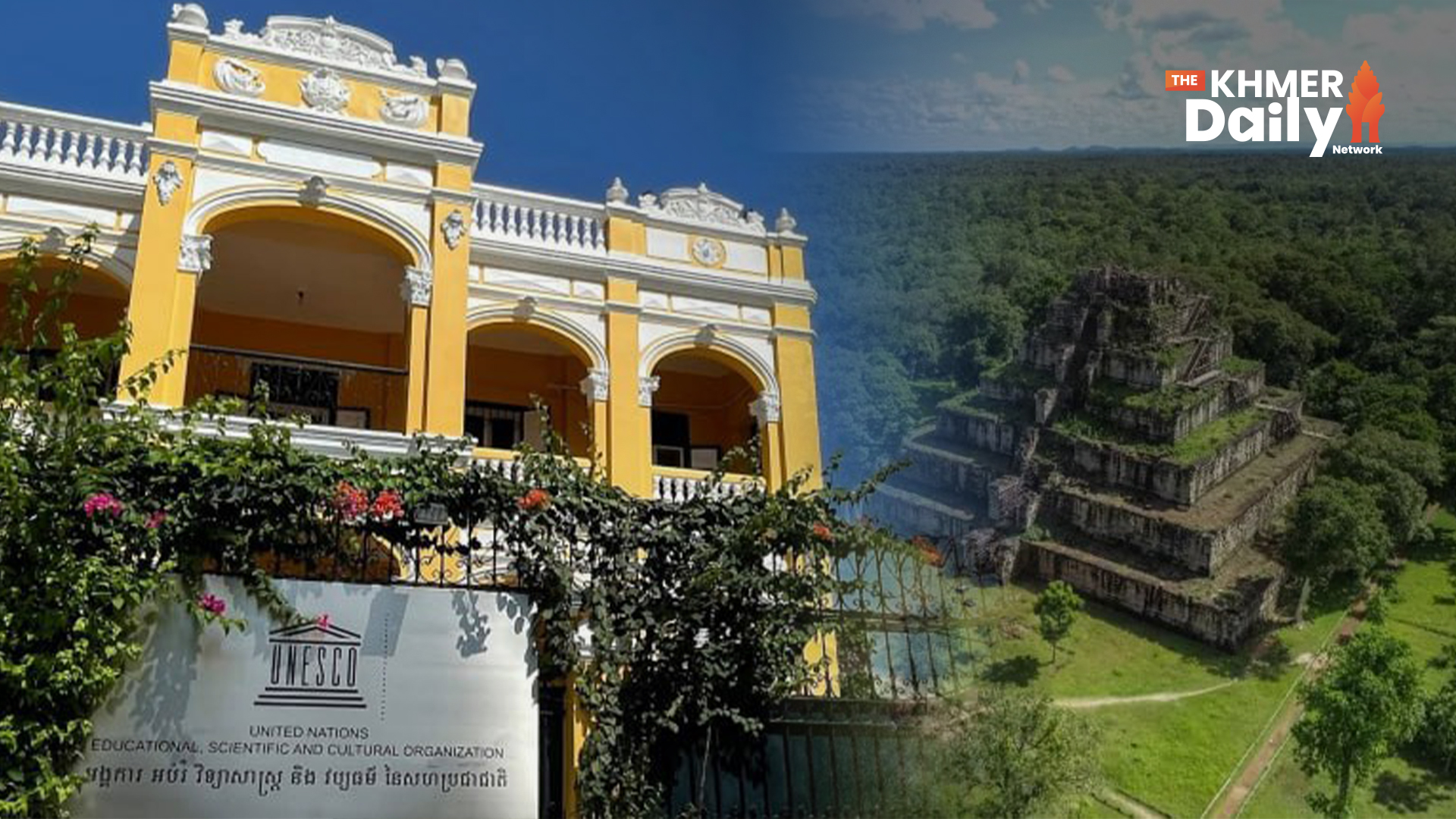
PHNOM PENH — Sept. 17, 2026: Three years after its UNESCO inscription, the ancient capital of Koh Ker continues to reveal the brilliance of the Khmer Empire — a city of towering pyramids, monumental sculpture and sophisticated hydraulic engineering that flourished for a brief but remarkable period in the 10th century.
Koh Ker was inscribed on the World Heritage List on Sept. 17, 2023, through Decision 45 COM 8B.8 at the 45th session of the World Heritage Committee in Riyadh, Saudi Arabia. The site was recognised under criteria (ii) and (iv), acknowledging its exceptional interchange of human values and its role as a prototype of a new urban landscape.
The city, known in inscriptions as Lingapura (City of Lingams) or Chok Gargyar (City of Glance), was established by King Jayavarman IV in 921 CE. It served as one of two rival capitals alongside Angkor until 928 CE, then as the sole capital until 944 CE, when the empire's political centre returned to Angkor.
Constructed in a single phase over a 23-year period, Koh Ker was laid out on the basis of ancient Indian religious concepts of the universe. Its unconventional city planning and architecture were driven by two innovations: the artistic expressions of the Koh Ker Style and the construction technology using very large monolithic stone blocks.
At the heart of the site is the Prasat Prang, a 35-metre-high step pyramid that UNESCO describes as "the apotheosis of an eccentric building style" and the only one of its kind in Southeast Asia. The complex also includes unique-in-style temples, Shiva-linga sanctuaries, civil structures, ponds, dykes, reservoirs and ancient roads.
Koh Ker's water management techniques combined highland river damming with the lowland system of large reservoirs, canals and terraced fields — an engineering achievement that reflected the empire's organisational capacity. The Koh Ker Style, defined by its dynamic motion and sense of movement, produced monumental sculptures in the ronde-bosse technique, including giant depictions of scenes from the Ramayana and Mahabharata.
Despite its brief tenure as a capital, Koh Ker's innovations had a profound and lasting influence on urban construction and artistic expression across the region.
In the decades since the Cambodian civil war, many of the site's statues were looted. Under the leadership of the Royal Government and in cooperation with the international community, Cambodia has achieved significant results in repatriating ancient artifacts.
Conservation work continues. The National Authority for Preah Vihear began a three-year restoration of Prasat Krahom in May 2025, funded by the ALIPH Foundation, covering site cleaning, excavation, structural restoration and conservation of wall paintings and bas-reliefs.
Prime Minister Hun Manet, in his anniversary message, emphasised the importance of cooperation among all relevant institutions to manage and conserve the temples, traditions, people, land, forests and wildlife in line with World Heritage Committee guidelines. He noted that all citizens share ownership of Cambodia's cultural heritage and the duty to protect it.
He also appealed to media outlets to promote the anniversary and to link Koh Ker with other World Heritage sites — Sambor Prei Kuk, Angkor and Preah Vihear — to boost regional tourism.
Source: UNESCO
World Heritage Centre
National Authority for Preah Vihear
Prime Minister Hun Manet
Reported by The Khmer Daily Network
Koh Ker was inscribed on the World Heritage List on Sept. 17, 2023, through Decision 45 COM 8B.8 at the 45th session of the World Heritage Committee in Riyadh, Saudi Arabia. The site was recognised under criteria (ii) and (iv), acknowledging its exceptional interchange of human values and its role as a prototype of a new urban landscape.
The city, known in inscriptions as Lingapura (City of Lingams) or Chok Gargyar (City of Glance), was established by King Jayavarman IV in 921 CE. It served as one of two rival capitals alongside Angkor until 928 CE, then as the sole capital until 944 CE, when the empire's political centre returned to Angkor.
Constructed in a single phase over a 23-year period, Koh Ker was laid out on the basis of ancient Indian religious concepts of the universe. Its unconventional city planning and architecture were driven by two innovations: the artistic expressions of the Koh Ker Style and the construction technology using very large monolithic stone blocks.
At the heart of the site is the Prasat Prang, a 35-metre-high step pyramid that UNESCO describes as "the apotheosis of an eccentric building style" and the only one of its kind in Southeast Asia. The complex also includes unique-in-style temples, Shiva-linga sanctuaries, civil structures, ponds, dykes, reservoirs and ancient roads.
Koh Ker's water management techniques combined highland river damming with the lowland system of large reservoirs, canals and terraced fields — an engineering achievement that reflected the empire's organisational capacity. The Koh Ker Style, defined by its dynamic motion and sense of movement, produced monumental sculptures in the ronde-bosse technique, including giant depictions of scenes from the Ramayana and Mahabharata.
Despite its brief tenure as a capital, Koh Ker's innovations had a profound and lasting influence on urban construction and artistic expression across the region.
In the decades since the Cambodian civil war, many of the site's statues were looted. Under the leadership of the Royal Government and in cooperation with the international community, Cambodia has achieved significant results in repatriating ancient artifacts.
Conservation work continues. The National Authority for Preah Vihear began a three-year restoration of Prasat Krahom in May 2025, funded by the ALIPH Foundation, covering site cleaning, excavation, structural restoration and conservation of wall paintings and bas-reliefs.
Prime Minister Hun Manet, in his anniversary message, emphasised the importance of cooperation among all relevant institutions to manage and conserve the temples, traditions, people, land, forests and wildlife in line with World Heritage Committee guidelines. He noted that all citizens share ownership of Cambodia's cultural heritage and the duty to protect it.
He also appealed to media outlets to promote the anniversary and to link Koh Ker with other World Heritage sites — Sambor Prei Kuk, Angkor and Preah Vihear — to boost regional tourism.
Source: UNESCO
World Heritage Centre
National Authority for Preah Vihear
Prime Minister Hun Manet
Reported by The Khmer Daily Network