International
• 3 days ago• Lim_Rothanaksambath
Mekong Pollution Concerns Intensify as Mae Sai Residents Prepare Border Demonstration

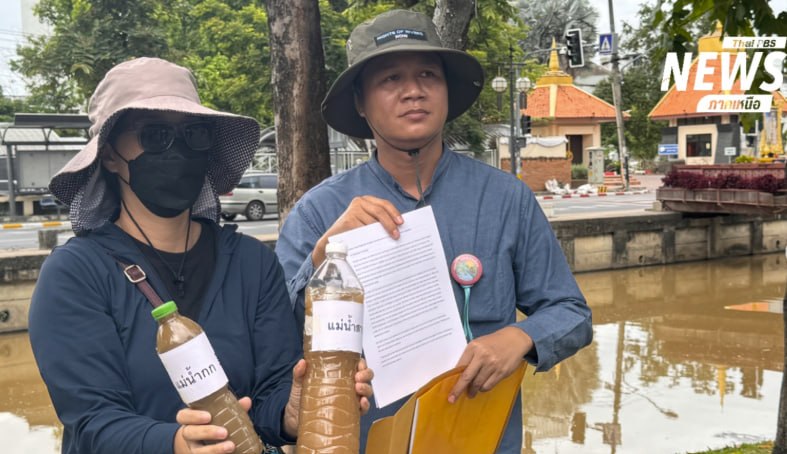
PHNOM PENH, November 19, 2026 — Cross-border pollution concerns involving the Mekong River system are gaining renewed attention in Thailand, where residents are preparing another public demonstration over suspected mining-related contamination in Myanmar, nearly two years after arsenic pollution was first identified in northern Thailand.
The latest development comes as Thai authorities report heavy metals above safety standards in some river fish, while health screenings and environmental monitoring continue to raise questions about the potential effects of pollution on communities along the river.
According to Thai PBS, civil society groups have repeatedly sought action over the issue. They submitted a petition to the Chinese Consul General in Chiang Mai on July 6, followed by another to the Myanmar Consul General in Chiang Mai on August 3.
The groups are preparing to demonstrate on November 22 in Mae Sai district, Chiang Rai province, near the Thai-Myanmar border opposite Tachileik. Thai PBS reported that the pollution concerns are linked to mining activities on the Myanmar side, which residents believe are contributing to contamination across the border.
The broadcaster said the issue, which has persisted despite repeated calls from local communities, could become an international concern if Thailand, Myanmar and China fail to pursue meaningful solutions. It also pointed to the importance of informal discussions between Thailand’s prime minister and Chinese representatives, alongside further talks scheduled in Thailand on November 25–26.
The environmental problem dates back to March 2025, when arsenic contamination was first identified in Thailand’s Kok River. Thailand alerted the Mekong River Commission (MRC) on April 5, 2025, leading to regional discussions and monitoring of affected waterways. CNA also brought attention to the issue through reporting in 2025.
In April 2026, the MRC reported continuing arsenic contamination in parts of the Kok, Sai, Ruak and Mekong rivers. Some water samples showed readings above the 0.01 milligrams-per-litre standard, while sediment samples indicated more serious contamination at certain locations.
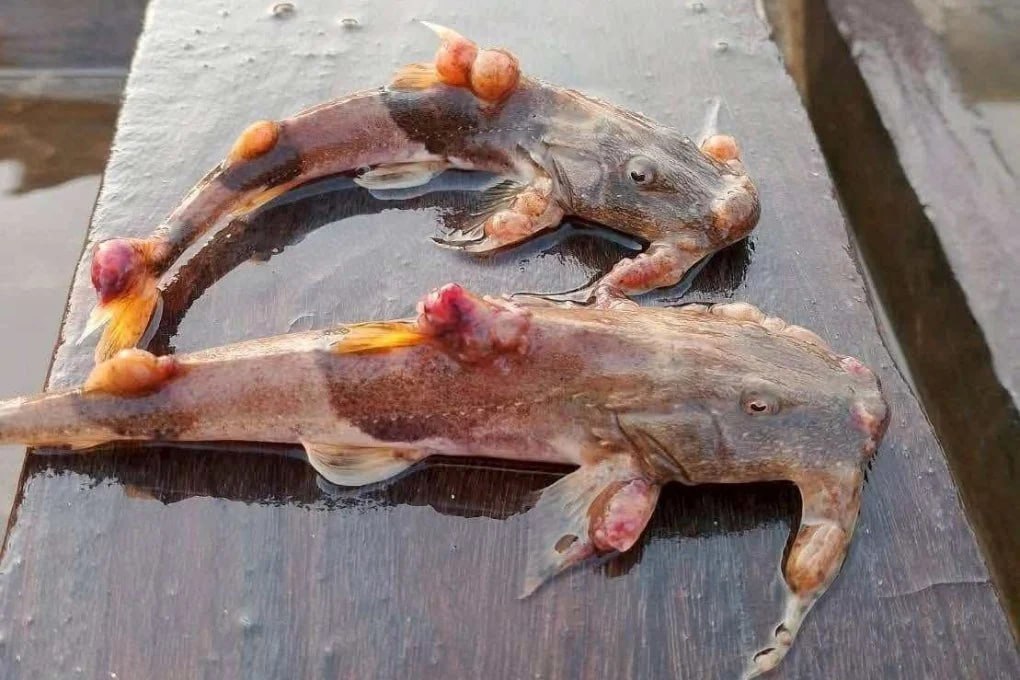 Photo: SCMP
Thailand’s Department of Fisheries reported on November 14 that tests had detected heavy metals above safety standards in some fish and aquatic animals collected from the Kok and Mekong rivers. The findings were limited to the samples and locations tested and do not establish that all fish in the river system are unsafe.
The South China Morning Post separately reported on November 16 that fishermen had found catfish with blisters, unusual growths and discoloured fins. The fish have been described locally as “zombie fish,” although their abnormalities have not been conclusively linked to arsenic or other heavy metals.
Health screenings have added to public concern. Reports on November 17 and 18 said 17 of 177 residents tested in Nong Khai province had urinary arsenic levels above the reference value used in Thailand’s screening programme. Further medical assessments were recommended, but the results alone do not establish a direct link to river pollution.
The MRC’s October 5 update, meanwhile, reported that all 15 water samples collected at three sites in Laos’ Bokeo and Luang Prabang provinces between July and September were below the arsenic standard. The findings are reassuring for those monitored areas but cannot be taken as a complete assessment of the entire Mekong River.
For Cambodia, the issue carries regional significance because the Mekong is essential to fisheries, agriculture, water supplies and livelihoods. While available monitoring has not established unsafe arsenic levels in Cambodian sections of the river, developments in Thailand reinforce the need for continued testing and transparent cross-border information-sharing.
With another demonstration planned in Mae Sai and further discussions expected later this month, pressure is mounting on the countries concerned to identify pollution sources and coordinate a lasting response. Without effective cooperation, the environmental issue risks becoming a wider diplomatic concern involving communities and governments across the region.
Sources:
Thai PBS – Report on planned Mae Sai demonstration and earlier petitions
CNA – Report supplied by user
Mekong River Commission – October 2025 update
Mekong River Commission – April 29, 2026 assessment
The Nation Thailand – March 2026 monitoring results
South China Morning Post – November 16, 2026
Reported by The Khmer Daily Network